
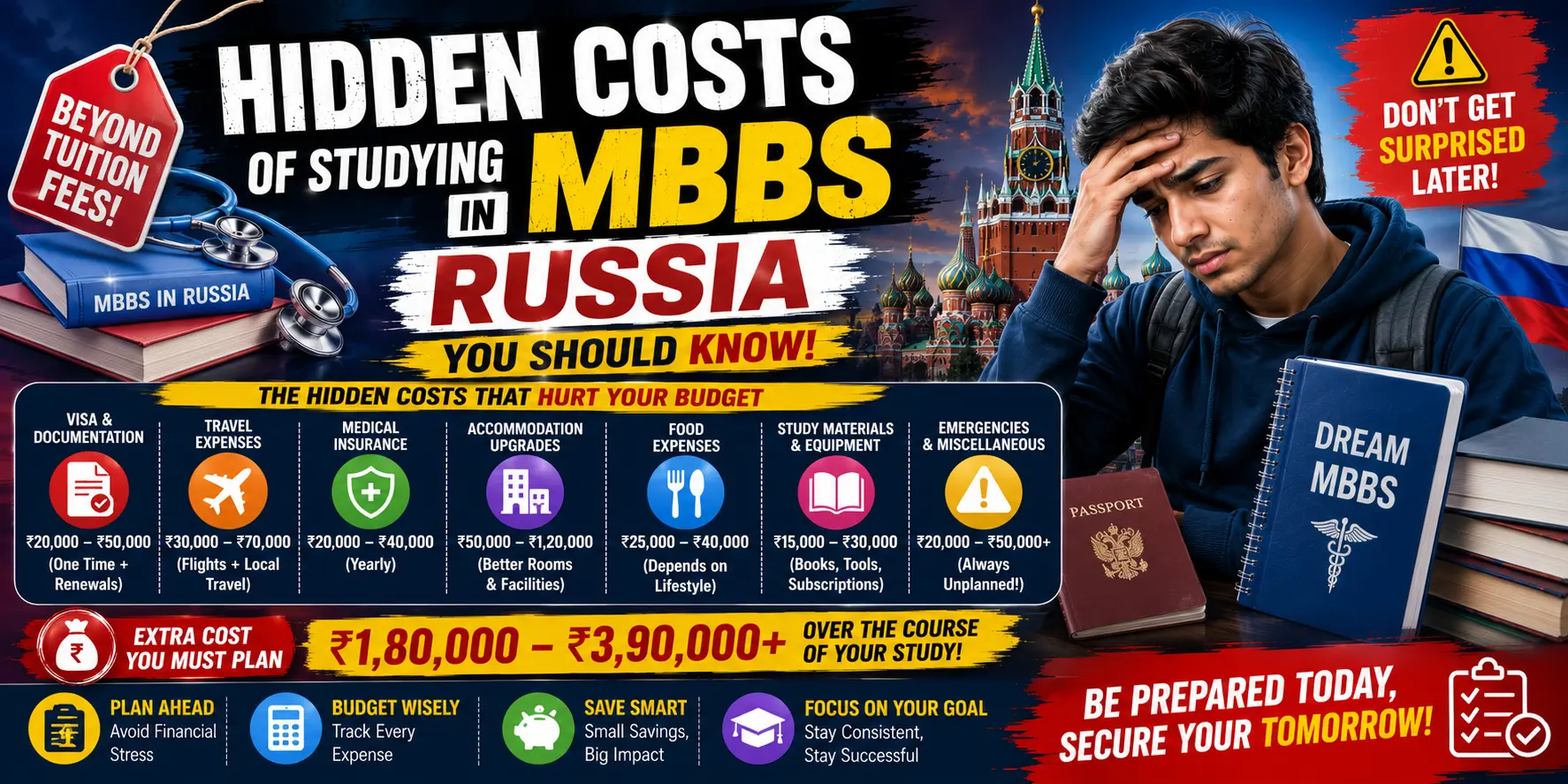
The most popular place for Indians who want to earn a medical degree abroad is still Russia. Students see MBBS in Russia as an economical choice because of the attractive tuition fees, an array of medical universities, organized medical infrastructure, and an open medical ecosystem. Additionally, there is the comparative advantage of studying in Russia vs. the private medical colleges of India.
The focus of the students and parents tends to be on the tuition fees when calculating the education expenditure. However, there are a multitude of variable costs that are associated with the duration of the MBBS program. There is no intent to deceive. It is the staff's responsibility to explain the costs during the counseling sessions, but the students are often kept in the dark. For the students that are first-time travelers to Russia, there is a significant element of financial risk.The financial impact of studying in Russia for MBBS is mitigated if all of the costs are planned for.
The Bigger Picture Beyond Just the Tuition Fees
Annual tuition and hostel fees are the biggest components of the cost of studying MBBS in Russia, but there are many more expenses to this journey. In no particular order, there are:
- costs to document
- costs to get a visa
- costs to travel
- costs to insure medically
- costs to live
- costs to buy supplies
- costs to prepare for the Licensing exams
- costs associated with exchange rate fluctuations
All of these costs need to be part of the financial plan.
Admission and Documentation Expenses
For students starting their journeys, costs often occur before instruction even begins.
Passport and Application Costs
Acquiring a passport incurs costs for students such as:
- Passport application
- Document verification
- Passport renewal
Educational Document Authentication
Verification of academic records is often a requirement of Russian universities. This may incur costs of:
- Notarization
- Translation
- Apostille
- Attestation
While these costs may appear small, they may require students to increase their financial budget.
Admission Processing Fees
Some universities have costs associated with:
- Application review
- Invitation letter
- Administrative processing
- Enrollment confirmation
To avoid budget surprises, students should request detailed admission related costs.
Student Visa and Immigration Costs
Acquiring a Student Visa is a requirement for students planning to study in Russia. Common Visa costs may include:
- Visa Application
- Embassy Fees
- Medical Certificate
- Cost of Documents
Many students also overlook the costs of Visa renewal and registration during their studies.
Travel Expenses
Travel costs are often the most underestimated expenses for a prospective MBBS in Russia.
Initial Travel
Travel costs during this up front stage include:
- Air Travel
- Transfers
- Baggage Fees
Annual Travel to India
Travel during vacations is customary for many students. Traveling back and forth from your host country increases the overall cost of an education.
Unplanned Travel
Traveling for unplanned events such as a family emergency is even more costly.
Expense of Russian Hostels
Hostels in Russian universities are an affordable option for students, but they do have some out of pocket expenses that you should be aware of. Some fees are:
- Security deposit
- Maintenance fee
- Registration fee
- Utility fee
- Fee for laundry
These fees may not be included in the total cost of the hostel.
Cost of Private Housing
Some students opt out of hostels after their first year and prefer private housing. This also incurs costs of:
- Rent
- Utilities
- Internet
- Furniture
Private housing has a high cost of living.
Frequent Costs of Food
Budgeting for food can be more difficult since costs vary.
Indian Food
There are Indian mess facilities that offer meal plan options. Grocery shopping and dining can be more expensive. If you prefer Indian grocery stores there is an expense for:
- Imported goods
While food is more affordable than western countries it can add up.
Costs of Daily Living
If you prefer not to use the mess facilities, cooking for yourself will likely be a better option, but can be costly for:
- groceries
- kitchen tools
- appliances
Communication
Modern medical education uses a lot of valuable digital resources. Here is your list of recurring student expenses:
- Expense for phone plans
- Internet service costs
- Subscriptions for educational platforms
- Family communication expenses
Although these costs appear small, they quickly add up over the duration of an academic course.
Medical Insurance and Healthcare Costs
International students often must purchase health insurance. These costs include:
- Insurance premiums
- Visits to the doctor
- Lab work
- Medications
Though healthcare services in Russia are of high quality, students need to financially plan for unforeseen healthcare needs.
Academic and Educational Costs
Tuition costs are not the only academic costs. Medical students often purchase the following items:
- Texts
- Medical reference texts
- Lab Manuals
- Clinical tools
- White Coats
- Stethoscopes
These costs increase as students complete their clinical training.
Digital Learning Tools
Many students also purchase:
- Medical Apps
- Question Banks
- Learning Platforms
- Prep Resources
These tools are especially critical for success.
Clinical Training and Learning Costs
Practical training is an important part of medical education. Students often incur additional costs for:
- Transportation to hospitals
- Clinical training uniforms
- Practical exams
- Lab learning
These costs vary based on the university and training framework.
Currency Exchange Costs
Students and their families often overlook the cost of currency exchange. The cost to exchange currency adds up quickly over the duration of an academic course. Since the typical duration of the MBBS in Russia program is six years, changes in the exchange rate during that period may affect:
- Traveling (to and from Russia)
- Living (in Russia)
- Tuition (to study in Russia)
If the university does decide to keep their Russian tuition costs constant, changes in the exchange rate between the Indian Rupee (INR) and the Russian Ruble (RUB) will impact the cost of studying in Russia. Financial buffers will allow the uncertainty to be managed by the family.
Winter Clothing Costs
Coming from the tropical Indian climate, students often are unprepared to deal with the Russian winter.
Warming winter gear can include the following:
- Winter jackets
- Thermal wear
- Winter boots
- Gloves
- Scarves
These additions to the expense of the first year are almost unavoidable.
Residence Registration and Compliance Costs
As a general rule, International students need to abide by local laws.
Addition costs can be:
- Residence registration
- Renewing documents
- Various administrative tasks
Though these costs do add to the total, they are typically low.
University Extra Fees
Some universities have extra fees beyond tuition costs and can include:
- Exams
- Library
- Labs
- Student Fees
- Graduation
These need to be clarified prior to enrolling.
Costs of Preparing for the Licensing Exams
A common oversight of many students is not planning for the costs that will be incurred for the licensing exams. Commonly for MBBS in Russia, these costs include:
- Licensing exam prep
- Study materials
- Mock exams and
- Tests
- Travel Costs
These can add up quickly and need to be planned for.
Internship and Career Development Costs
Going directly into the labor market, or continuing your education, can come with extra costs for students, such as:
- Taking certification courses
- Offering or taking part in research
- Attending events
- Investing in further training
These costs are optional, however may greatly impact opportunities and earning potential.
Emergency Financial Requirements
Long academic programs can lead to unexpected costs.Possible emergencies can include, but are not limited to:
- Changes to your health
- Changes within your family
- Changes in your transport
- Changes in your study
- Changes in your housing
Experts recommend having an easily accessible stash of cash to cover several unexpected costs.
Importance of Choosing a Recognized Medical University
One of the most important financial considerations is to make sure that the university is duly recognized.Students should make sure that the university is registered in the WDOMS.WDOMS is an internationally recognized database of medical schools.Students of India should also pay attention to the new directives of the NMC.The NMC regulates the eligibility of Indian students who want to study medicine outside the country.Students can also refer to the database of the WHO.WHO is a main authority in the field of public health and medical care.Verifying recognition before admission is a safeguard for both education and investment.
How to Avoid Financial Surprises
There are a number of things students can do to mitigate the risk of incurring unforeseen costs.
Request a Complete Cost Breakdown
Before you finalize everything, ensure that you have clear information about:
- Tuition
- Hostel charges
- Visa
- Health Insurance
- Exam Fees
- Service Charges
Emergency Fund
Emergency situations lose you money. In order to protect yourself from loss, maintain an emergency fund.
Track Currency Exchange Rates
Paying attention to how the currency exchange market works can help families save money for their children studying MBBS abroad.
Create a Long-Term Budget
Students planning to study MBBS should plan their budgets for the entire duration of the MBBS course, and not just for the first year.
Is MBBS in Russia Still a Good Deal?
Yes. Considering the hidden costs along with the direct tuition costs, MBBS in Russia is one of the best economic choices for Indian students to acquire a degree in medicine recognized globally. The goal should not be studying abroad. Instead, one should understand the affordable options.
Conclusion
The tuition for MBBS in Russia is just one of the fees that students and their parents should know about before making the decision to study there. Other costs like documentation, visas, flights, accommodation freeze, meals, insurance, educational resources, licensing, and an emergency fund will add to the overall budget. Students can prepare for their journey studying medicine in Russia by planning their finances, asking for clear fee structures, and confirming if the university is listed in the WDOMS, the NMC, and the WHO.