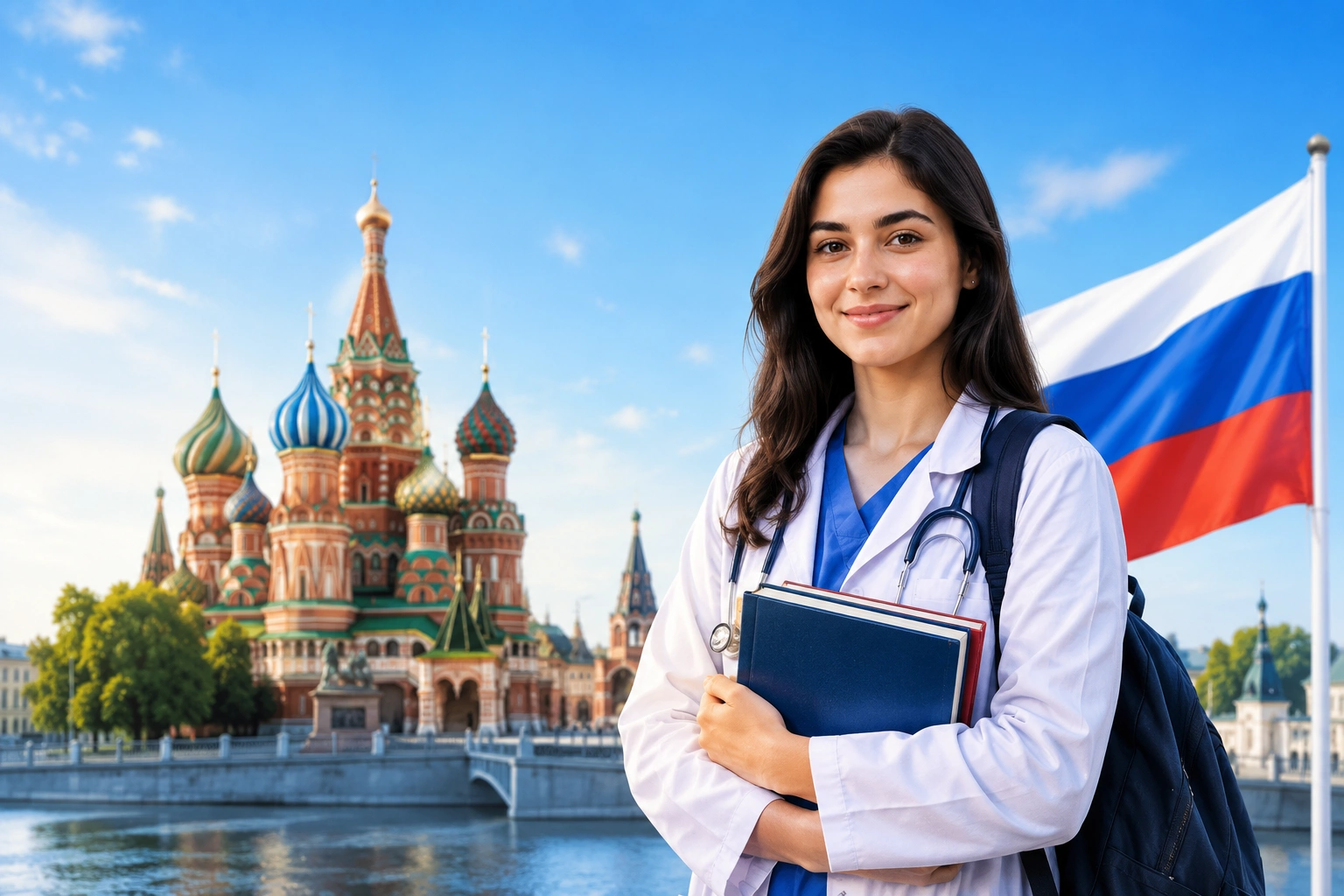
Every year, nearly one million Indian students who aim to become doctors apply for medical programs at domestic Indian institutions. However, India’s local medical schools can only offer admission slots to fewer than 1% of these applicants. This fierce competition prevents the vast majority of young people holding dreams of practicing medicine from achieving their goals within India, so pursuing a Bachelor of Medicine and Bachelor of Surgery (MBBS) in Russia has become the most popular choice among Indian students studying medicine abroad.
All Russian medical schools that offer this MBBS program are certified by the World Health Organization; their degrees are recognized globally, their program duration is exactly the same as that of medical programs in India, and their tuition fees are only one-third of the cost of comparable medical programs in Europe and the United States. These schools also provide full English-language instruction, dedicated dormitories for international students, and matching support facilities, which eliminates international students’ concerns about language and daily life challenges.
This guide is specifically developed for Indian students planning to pursue an MBBS in Russia. It covers the full process from pre-application preparation to post-graduation degree authentication, and delivers practical, actionable guidance on core topics including school selection and visa processing.
Russia has emerged as a popular global destination for international students pursuing medical degrees, and its core appeal lies in the rare balance it achieves between high academic standards and low study costs. Its specific advantages can be divided into six dimensions.
The total cost of the 6-year MBBS program is much lower than private medical colleges in India, making it budget-friendly.
Russian universities do not charge hidden fees, quota charges, or donations. Students pay only the official tuition fees.
Most leading universities offer complete English-medium MBBS programs, ensuring better understanding and communication.
Universities provide digital classrooms, research labs, simulation centers, and affiliated teaching hospitals.
Students receive practical training, patient interaction, and clinical exposure to build real-world medical skills.
| Particulars | Details |
|---|---|
| Course | MBBS (Equivalent to MD) |
| Country | Russia |
| Duration | 6 Years |
| Medium | English |
| Eligibility | 10+2 with Physics, Chemistry and Biology |
| Minimum Marks | As per NMC eligibility criteria |
| NEET Qualification | Required |
| IELTS / TOEFL | Not Required |
| Tuition Fee | Varies by University |
| Degree Recognition | NMC, WHO and other global authorities |
| Intake | September |
The 2026–27 Academic Year study abroad program for pursuing an MBBS (equivalent to an MD) in Russia has the following core parameters: 6 years of English-medium instruction, September intake, and a degree accredited by institutions including NMC and WHO. Eligibility for application requires that applicants completed studies in physics, chemistry, and biology during their 10+2 stage, attained the required academic scores, and passed the NEET exam. IELTS and TOEFL scores are not required. Tuition fees vary across participating universities, so applicants are advised to compare offerings across multiple schools and make reasonable plans.
When it comes to historic universities, this institution ranks highly, especially in terms of academic prestige and research. The clinical exposure and infrastructure here is of the highest modern standards
Applicants are only required to pass the NEET exam to gain eligibility, with no additional minimum score requirement.
A table with separate columns organizes the MBBS program fees of 8 Russian universities for the 2026–27 academic year. For each university, the table clearly lists annual tuition and accommodation fees, both priced in Indian Rupees.
| University | Tuition Fee Per Year | Hostel Fee Per Year |
|---|---|---|
| Kazan Federal University | 6,53,400 ₽ | 16,000 ₽ |
| Bashkir State Medical University | 4,05,000 ₽ | 25,000 ₽ |
| Orenburg State Medical University | 6,500 $ | Included |
| Perm State Medical University | 6,500 $ | Included |
| Mari State University | 6,500 $ | Included |
| Crimean Federal University | 3,44,000 ₽ | 35,000 ₽ |
| Tver State Medical University | 4,30,000 ₽ | 98,000 ₽ |
The schools covered include Kazan Federal University, Crimean Federal University, Pirogov National Medical University, and other relevant universities.
International students intending to study medicine in Russia may refer to the core strengths of these 8 top medical universities:
| Universities | Details |
|---|---|
| Kazan Federal University | A long-established prestigious institution founded in 1804, boasting outstanding research strength. |
| Bashkir State Medical University | Charges reasonable tuition and holds a positive reputation. |
| Orenburg State Medical University | Provides solid clinical training. |
| Perm State Medical University | Allows students to gain early exposure to clinical practice. |
| Mari State University | Popular among Indian international students. |
| Irkutsk State Medical University | Provides solid clinical training. |
| Tver State Medical University | Charges reasonable tuition and holds a positive reputation. |
| Pirogov National Research Medical University | Russia's top-tier medical institution. |
The application guidelines for the Russian MBBS program that we have compiled state that all designated materials must be prepared in full. Prepare the following documents:
Only the Bank Statement needs to be submitted as needed, and all materials must have their compliant notarized and apostilled copies prepared in advance.
This paper outlines the Russian MBBS medical program, which has a total duration of 6 years, split into two 3-year phases:
In the first 3 years, students complete core foundational courses such as anatomy to build a base of medical theory.
In the latter 3 years, they study clinical courses including internal medicine and surgery.Finally, they are required to complete high-intensity clinical rotations and hands-on practical training in hospitals
Indian international students who pursue an MBBS degree in Russia must pass the NExT exam to practice medicine in India. They are required to:
Enrol in Russian universities accredited by the NMC.
Maintain uninterrupted academic progression.
Prepare for the exam during their studies.
Choosing a compliant institution is the core prerequisite.
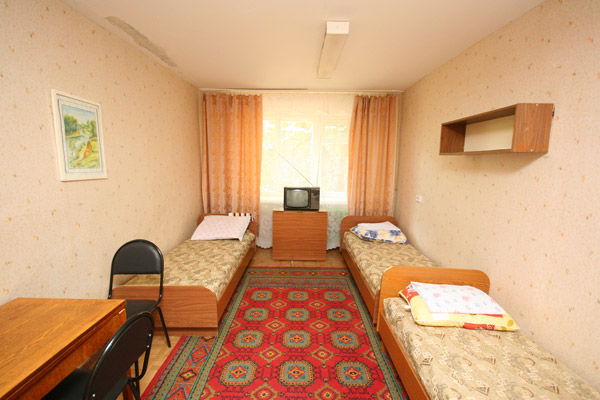
Russian university dormitories come with a total of 10 universal standard amenities, including:
Most higher education institutions also provide additional exclusive, independent dormitory facilities specifically for international students.
The vast majority of Indian international students planning to study in Russia have total monthly living expenses across five major categories that amount to approximately 12,000 to 25,000 Indian rupees.
| Expense | Monthly Cost |
|---|---|
| Accommodation | ₹5,000 – ₹10,000 |
| Food | ₹5,000 – ₹8,000 |
| Transportation | ₹500 – ₹1,500 |
| Internet | ₹500 – ₹1,000 |
| Miscellaneous | ₹2,000 – ₹5,000 |
Most students spend between:
Pursuing a Bachelor of Medicine (MBBS) degree in Russia offers seven core study-abroad advantages, which cover the core needs of applicants, including:
The post-graduation development paths of MBBS graduates from Russia are divided into five categories:
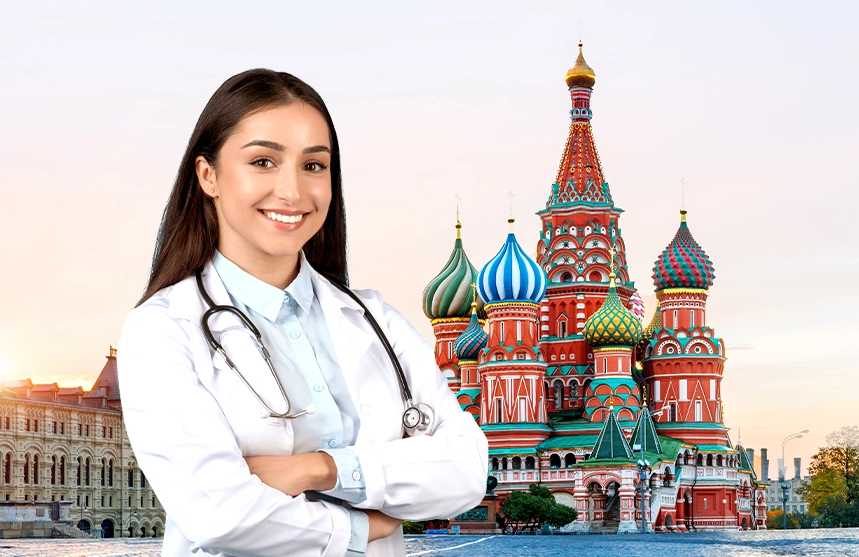
The application process for an MBBS program in Russia must be completed in the following 6 steps:
When selecting a university, you must choose an NMC-accredited institution, and list a small number of backup schools.
Submit your application after preparing the required documents: Application form, Academic documents
Wait for the university’s review and approval to receive your admission letter.
Obtain the official invitation letter required for visa applications.
Process your Russian student visa.
Travel to Russia and complete enrollment before the September intake season.
This article compiles standardised responses to 8 high-frequency core concerns raised by Indian students who intend to pursue an MBBS degree in Russia.
Given the high cost of medical education at private medical colleges in India, pursuing an MBBS degree in Russia has become a highly attractive option for a large number of Indian students. Russian medical schools boast well-developed educational infrastructure, experienced senior faculty, globally recognized qualifications, and low living costs.
However, a common misconception among the general public must be corrected: this path is by no means an easier alternative to studying medicine within India. Completing this program requires students to maintain strong academic investment, high self-discipline, and consistent effort throughout their studies. Prospective students must also complete three preparatory steps:
Students who conduct thorough advanced research have a higher probability of becoming qualified medical practitioners. This path lays a solid foundation for students’ medical careers, regardless of whether they choose to develop professionally in India or overseas.