
I remember standing outside a NEET coaching center in Kanpur last October, watching a father argue with an agent over a laptop screen. "You said 18 lakhs total," he kept saying. "Now you're telling me hostel is extra, mess is extra, insurance is extra." The agent smiled the way agents do. The son just stood there, staring at his shoes.
That scene has played out in a hundred cities across India. Lucknow, Patna, Indore, Kota. And it's why I keep writing about this topic every single year — because the numbers people are quoted at education fairs rarely match what a student actually pays by the time they're in their third year at a Russian medical university.
So let's actually break this down. Properly. With real figures, not brochure math.
What Agents Tell You vs. What You Actually Pay
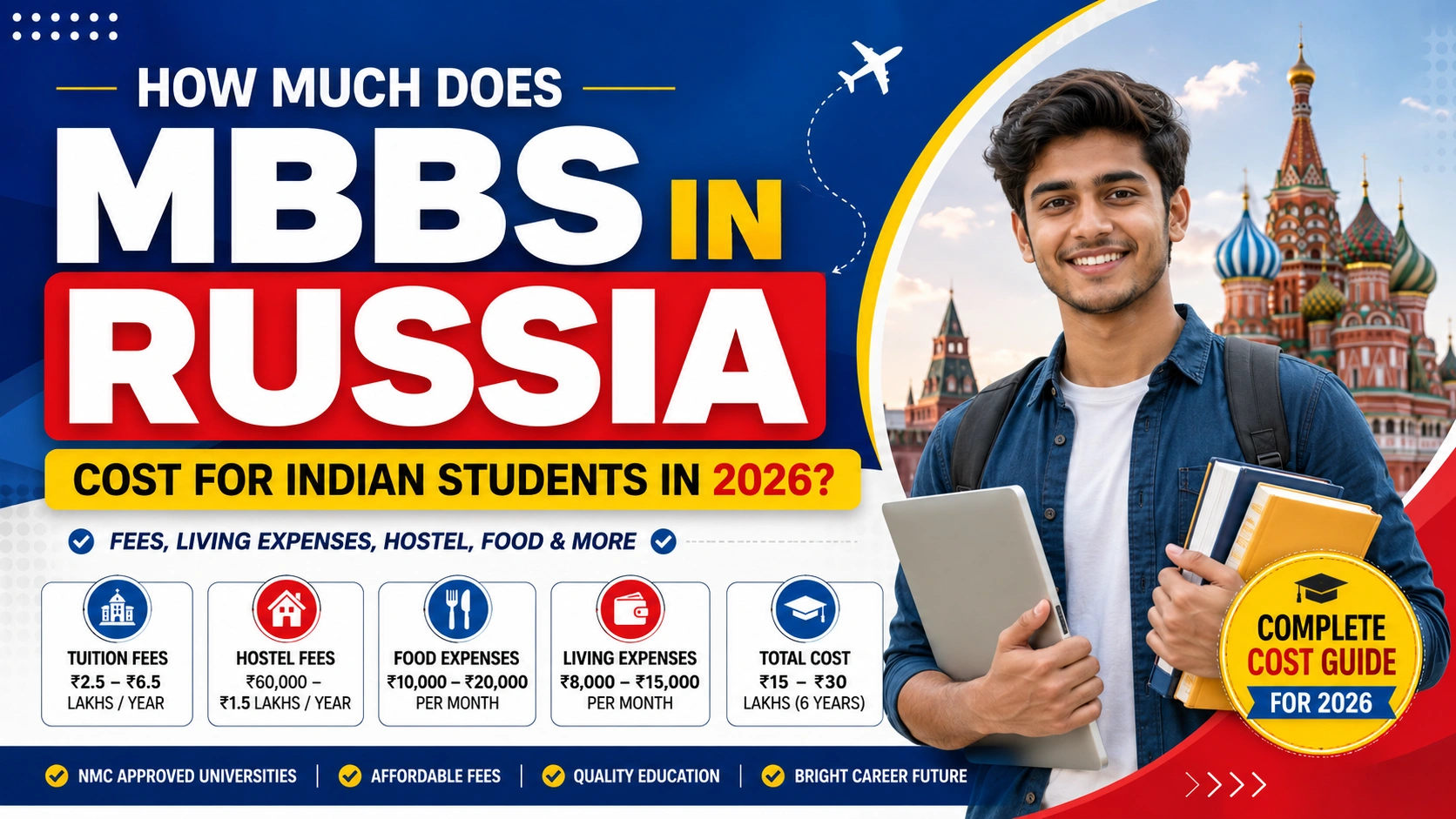
Most consultants quote a flat "package" — tuition plus hostel, sometimes food, sometimes not. In my experience, that number is almost always the tuition fee alone, dressed up to sound comprehensive. A student heading to Kazan Federal University or Crimea Federal University in 2026 should expect annual tuition somewhere between $4,500 and $7,000, depending on the university's ranking and whether it's recognized under NMC and listed with WDOMS.
That's not the full cost. Not even close.
Hostel accommodation typically runs $600 to $1,200 a year — sometimes shared, sometimes not, and the difference matters more than people think when you're living through a Russian winter. Food, if you're cooking yourself (and most Indian students do, eventually, out of necessity and homesickness for dal-chawal), costs roughly ₹6,000 to ₹9,000 a month. I've spoken to students in Volgograd who cut that down to ₹4,500 by buying in bulk from local markets instead of the overpriced stores near campus.
The Winter Tax Nobody Warns You About
Here's something I rarely see mentioned in any comparison article, and it genuinely irritates me because it changes a student's first-year budget significantly. Winter clothing in Russia is not optional, and it is not cheap if you buy it after landing.
A proper thermal jacket, boots rated for sub-zero temperatures, and layered inner-wear will cost anywhere from ₹15,000 to ₹25,000 if bought in India before departure — which, frankly, is the smarter move. I've heard from more than one student in Ryazan who bought winter gear locally in Russia and paid nearly double, simply because they didn't plan ahead. Add to that heating costs sometimes bundled into hostel fees, sometimes not, and you're looking at another line item that agents conveniently skip.
Total Realistic Cost, Year by Year
Based on conversations with students currently enrolled — not projections, actual lived numbers from 2025 batches — the realistic annual cost for MBBS in Russia sits between ₹4.5 lakhs and ₹6.8 lakhs per year, all-inclusive. Tuition, hostel, food, basic insurance, local transport, and a reasonable buffer for winter essentials and one or two flights home.
Over six years — five years of coursework plus the internship year — that puts total spending somewhere between ₹27 lakhs and ₹41 lakhs. Compare that to a private medical college in India, where capitation fees alone at some institutions in Karnataka or Tamil Nadu can cross ₹1 crore, and the gap becomes obvious fast.
Flights home are their own small saga. A round trip from Moscow or Kazan to Delhi during peak season — Diwali, or the December break — can run ₹35,000 to ₹55,000 if booked late. Book three months out, and you'll often find it under ₹28,000. I tell every student the same thing: book early, or accept you're subsidizing the airline's profit margin.
Where I Push Back on the Popular Narrative
Now here's where I'll be a little blunt, because I think this needs saying. There's a widespread belief among Indian families that "cheaper Russian university equals worse doctor." I don't think that's accurate, but I also don't think it's entirely false either.
Not every university in Russia is equal. Not even close.
Some institutions have genuinely rigorous clinical training, strong hospital tie-ups, and consistent NMC screening test pass rates. Others exist largely to enroll international students and collect tuition, with clinical exposure that's thin at best. I've walked through hospital wards attached to certain universities and honestly wasn't impressed. So when someone tells you "any Russian MBBS is a good deal," push back on that. It's not the country that determines quality. It's the specific university, its affiliations, and whether its degree is recognized under WDOMS and accepted for the NMC screening exam that Indian graduates must clear before practicing back home.
The NEET Reality Check
None of this matters, obviously, if a student hasn't cleared or attempted NEET, which remains mandatory for any Indian student pursuing medicine abroad and returning to practice in India. I've met parents who assumed Russia was a way to bypass NEET entirely. It isn't. You still need a qualifying NEET score to be eligible, even if the university's own admission bar is lower than what you'd need for an Indian government college.
And once you're qualified and enrolled, the World Health Organization's global health workforce standards — the same ones referenced by the WHO — quietly shape how seriously international medical degrees get treated in global hiring conversations, even outside India. It's a detail most seventeen-year-olds filling out application forms never think about. They should.
What I'd Actually Tell a Parent Sitting Across From Me
If you're seriously considering this path for your child, do the homework consultants won't do for you. Ask for the university's actual NMC screening test pass percentage from the last three years, not just its overall reputation. Budget realistically — closer to ₹6 lakhs a year than ₹4 — because underestimating costs mid-course creates far more stress than planning conservatively from day one. And talk to current students directly, not just the agent's handpicked success stories.
Anyone genuinely exploring MBBS in Russia for Indian Student options in 2026 should treat the decision the way you'd treat any six-year financial and personal commitment — with skepticism, patience, and a willingness to ask uncomfortable questions before signing anything. I've seen families rush this decision under exam-season pressure, and I've seen the regret that follows when the numbers don't add up later. Don't be that family. Do the math first. Then decide.