
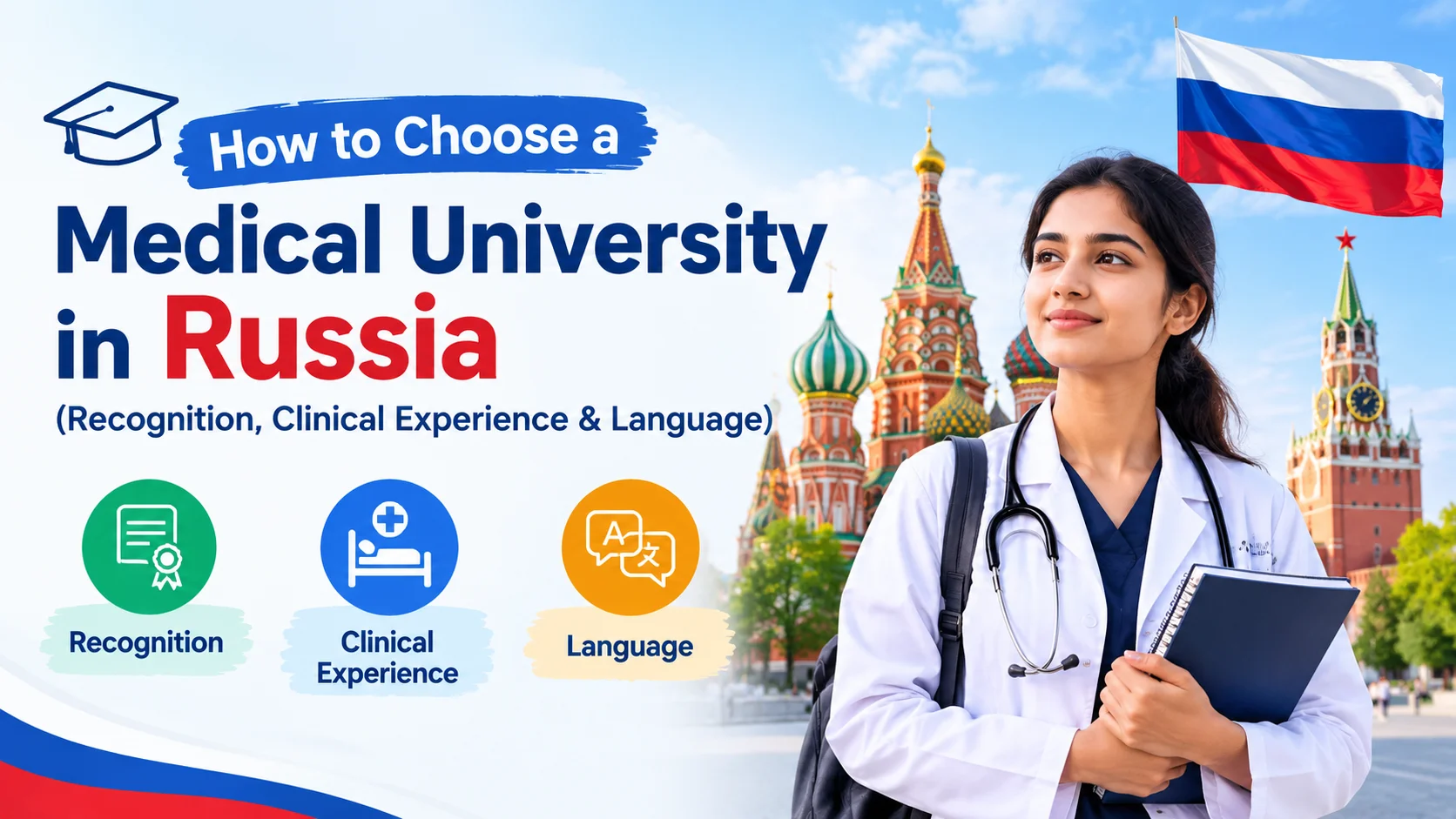
Every year thousands of families will look at a fee sheet and a couple of WhatsApp messages to shortlist a medical university in Russia. It is risky as the value of a degree is dependent on what you can do with it. You want to be able to practice in India, sit your licensing exam and feel confident treating real patients. This guide will help you choose the right MBBS in Russia by looking at factors such as recognition, clinical experience & language.
Why the University Matters Most
Whilst most people won’t talk about this, two different universities in the same town can provide different experiences. One might have their own multi-specialty hospital and a large Indian student community whereas the other could have limited clinical hours due to renting out wards from external hospitals to students. These hidden differences affect Indian students.
Recognition
Start here as if you can’t find a good university with good recognition then nothing will matter.
NMC Requirements
The National Medical Commission (NMC) has rules in place for foreign medical graduates. In general the course must be a certain length, taught in English, include an internship at the same university & the student must have passed NEET prior to entry. Make sure to check the current NMC Notice for requirements rather than what your agent tells you as they change regularly.
Check
Check the university is listed in WDOMS & that it has state recognition via Rosobrnadzor (Russian Education Regulatory body). The WHO also refers to this directory in their information on recognised training institutions globally.
Requirement Check
|
Issue |
Requirement |
Warning Sign |
|
Is listed in WDOMS |
wdoms.org |
Name doesn’t match or isn’t listed |
|
Has state recognition |
Rosobrnadzor records |
Only mention being approved in Brochure |
|
Meets NMC requirements |
Current NMC Notice |
Agent says “rules don’t apply” |
|
Internship at same university |
University policy |
Internship will be elsewhere |
Clinical Experience
This is an important section to read twice. In the early years lectures are generally similar across all universities. However, differences can be found in clinical experience. Ask if the teaching hospitals are owned by the university or just partner hospitals. How many students are there per bedside? If there are 10 students per student then there isn’t much learning. Make sure to ask for a third year timetable (not a promotional video!) & ensure the internship is done at the same university as Indian rules require.
|
Requirement |
Good Answer |
Bad Answer |
|
Teaching hospital |
Owned by University |
Informal arrangement |
|
Clinical groups |
Small groups |
Large rotating groups |
|
Clinical exposure |
Starts early in clinical years |
Starts late in final years |
|
Simulation labs |
Available and used in practice |
Facilities shown only in promotional material |
Language
International batches will have English teaching however many students fail to realise that patients in hospital will be speaking Russian. If you can’t speak any Russian you will struggle to take a patient's history despite passing exams. Good universities will teach Russian from the first year & will continue to teach throughout clinical years. Surprisingly many students will regret not taking language seriously as they go into rotations. Similarly when preparing for FMGE preparation in India they will struggle as they still rely on good communication skills with patients.
|
Year |
Focus |
Why? |
|
Early Years |
Basic Russian & Language |
Helps settle in & travel locally |
|
Middle Years |
Medical Vocabulary |
Understand case discussions |
|
Clinical Years |
Talking to Patients |
Improve history taking |
Tuition, Hostel & Hidden Costs
Make sure to check you have realistic costs. Tuition costs will vary across universities. Ensure you have a written breakdown of the full cost. Cheap doesn’t mean the lowest cost, sometimes very low tuition can mean limited clinical facilities. Separate costs for hostel, food, winter clothes, insurance & visa. Check if they provide student accommodation & Indian food.
|
Cost |
Price Range |
|
Tuition |
USD 3500–7000 |
|
Hostel |
USD 400–1000 |
|
Living costs |
USD 120–200 |
|
Insurance & Visa |
Small yearly amount |
These are approximate prices. Always check the current costs from the official university website.
How I Would Compare Universities
If I was applying for my own child I would do the following:
- Create a shortlist of 3 or 4 universities from the WDOMS directory.
- Check that they meet NMC requirements.
- Request a copy of their clinical rotation timetable & hospital information.
- Speak to current Indian seniors.
- Compare total costs.
Before applying make sure you understand the admissions process. Have all the necessary documents ready & understand the visa process. Check the official Study in Russia portal to ensure that they offer recognised programmes by the Government. Ensuring you have good pre-departure advice & honest study abroad counselling will stop you making rushed decisions. As a medical degree from overseas isn’t useful in India until you pass your screening exam by the National Board of Examinations, check the pass rate of previous batches. Having good patient interaction will depend on your language skills.
FAQ
1. Do Indian Students Need to Pass NEET for MBBS In Russia?
Indian candidates wanting to practice in India will need to have passed NEET.
2. Are Russian Medical Degrees Recognised in India?
As long as they meet current NMC requirements & pass their screening exam.
3. Is it really taught in English?
International batches are taught in English. However you will need to know some Russian for everyday & hospital communication.
4. How long is the course?
Usually around 6 years including internship. Check with individual universities.
5. Can I do my internship in India?
NMC rules require you to complete your internship at the same foreign university. Check the current notice.
6. How can I check a university?
Check they are listed in WDOMS, have state recognition & check the NMC notice.
7. Is cheap tuition better or clinical experience?
Clinical experience. If you’re saving money but aren’t getting a good education it won’t help.
8. Do I need to learn Russian before going?
No. However, try to start early. Knowing basic Russian will help in the first few months.
9. Is Russia Safe for Indian Students?
Most students report having a stable routine in the university towns. Make sure to follow the university guidelines & keep your official documents safe.
Conclusion
Choosing an MBBS in Russia shouldn’t be based on brochures. Ensure they are recognised by checking with the NMC & WDOMS. Take a close look at clinical experience & take language seriously. Be realistic with your budget. By taking your time & ensuring you have evidence to back up your choice you will save yourself money & your medical career.