
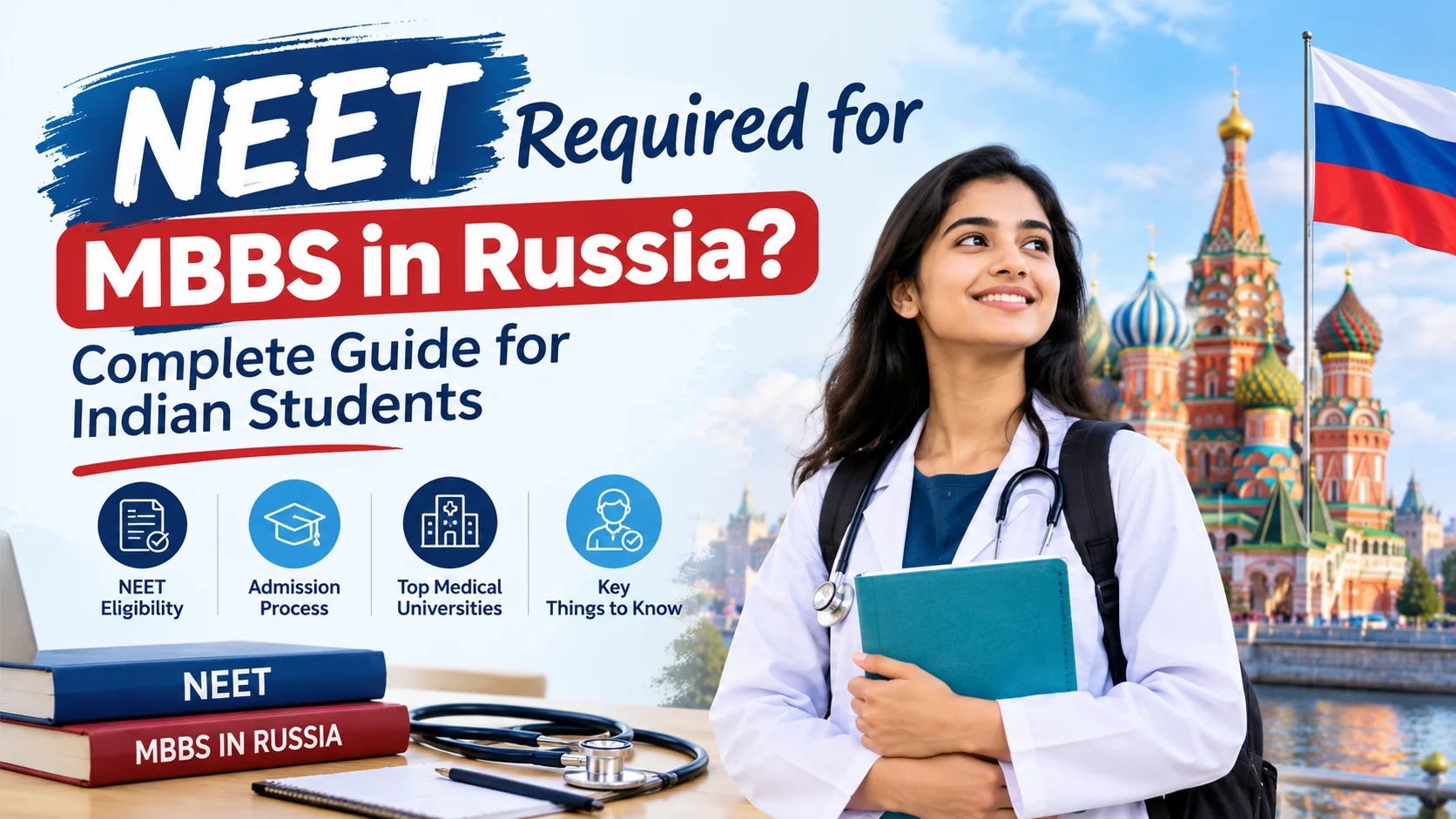
Yes, NEET is required. Every Indian student who wants to study MBBS in Russia and practise in India afterwards has to qualify for it first. The rule comes from the National Medical Commission, and it isn’t optional anymore. Some agents still say otherwise. Don’t believe them. At MBBS Advisor, we hear this question every admission season, so here’s the full picture.
Why Does NEET Matter for a Degree Earned Abroad?
Under the Foreign Medical Graduate Licensing Regulations, an Indian citizen seeking a primary medical qualification overseas must hold a NEET qualifying score. Skip it, and your degree may not be recognised back home. You also won’t be allowed to sit the licensing screening test. That’s the real risk. Not the university or the city, but the paperwork waiting for you at home. NEET is conducted by the National Testing Agency, and the score you need is only the qualifying one. You don’t need a top rank. Plenty of students who miss government seats still qualify and move ahead with MBBS in Russia.
Who Can Actually Apply?
Eligibility is simple, but each point gets checked. Here’s what most universities ask for.
|
Criteria |
Usual Requirement |
|
Age |
At least 17 years by 31 December of the admission year |
|
Class 12 subjects |
Physics, Chemistry, Biology and English |
|
Class 12 marks |
About 50% for general, 40% for reserved categories |
|
NEET |
Qualifying percentile (50th general, 40th reserved) |
|
Documents |
Valid passport, medical fitness certificate, photos |
Cutoffs can shift. Please verify the latest numbers on the official portals before applying.
What If You Haven’t Cleared NEET?
Honestly, most people don’t talk about this part. Some consultants will still offer admission without NEET. The university might accept you, since Russian institutions mostly care about your Class 12 marks. But the licence problem arrives later, when you return and can’t register. So the safe path is clear. Qualify first, then apply. If you’re still preparing, check this year’s NEET qualifying score rules and plan your attempt around the September intake.
Why Do Indian Students Pick Russia?
Fees are lower than Indian private colleges. Much lower. Many universities teach in English, and the clinical exposure is solid. Several are listed in the World Directory of Medical Schools, which is co-sponsored by WHO and used worldwide to verify recognised schools.
- Russian medical universities with English-medium batches for Indians
- No donation or capitation fee
- Indian mess facilities in many hostels
- Hospital training in large teaching hospitals
- A six-year MBBS programme that includes internship
Here’s a quick snapshot of what to expect.
|
Feature |
Details |
|
Course duration |
Around six years including internship |
|
Medium |
English (Russian taught for patient interaction) |
|
Main intake |
September |
|
Application window |
Roughly March to August |
|
Tuition |
Approx. ₹3–6 lakh per year, varies by university |
How Does the Admission Process Work?
It’s not complicated if you stay organised. Here’s the usual order.
- Qualify NEET and keep the scorecard safe.
- Shortlist universities recognised by NMC and listed in WDOMS.
- Submit your application with Class 10, Class 12 and NEET documents.
- Receive the admission and invitation letter.
- Pay the first-year fee through proper channels.
- Apply for the student visa, then book flights.
The Ministry of External Affairs publishes guidance for Indians travelling abroad, and it’s worth reading before you leave. Our team at MBBS Advisor also helps with admission documents so nothing gets rejected at the visa stage.
What Does MBBS in Russia Really Cost?
Tuition is only part of it. Budget for hostel, food, insurance and travel too. These are approximate yearly ranges, so confirm with your chosen university.
|
Expense |
Approx. Range Per Year |
|
Tuition |
₹3–6 lakh |
|
Hostel |
₹40,000–90,000 |
|
Food |
₹60,000–1 lakh |
|
Insurance and misc. |
₹20,000–50,000 |
Looking at the MBBS in Russia fees of several universities side by side saves money. Cheapest isn’t always safest, though.
Checks to Make Before Paying
Is the university approved by NMC? Does it appear in WDOMS? Will clinical training happen in the same institution? NMC rules require a minimum course duration of 54 months and a year of internship in the same foreign university. If any answer is no, walk away.
Licensing Exam After Returning
Every foreign graduate must clear a screening exam in India, currently the FMGE, before registering as a doctor. Pass rates are modest, so start preparing during your fifth year. The Ministry of Health and NMC notify any changes to the exam pattern.
Frequently Asked Questions
Is NEET compulsory for MBBS in Russia?
Yes. Indian students need to qualify NEET to be eligible for a medical degree abroad and for registration in India.
Do I need a high NEET rank?
No. The qualifying percentile is enough. Rank matters only for Indian seat allotment.
Can I take admission first and give NEET later?
That’s risky. Eligibility is checked at the time of admission, so qualify before you start.
Is the degree valid in India?
It’s valid if the university meets NMC criteria and you clear the licensing exam after returning.
How long is the course?
Typically six years including internship. NMC requires at least 54 months of study.
Is the medium of instruction English?
Mostly yes. You’ll still learn basic Russian for hospital interaction.
Which month does admission start?
Classes mostly begin in September, while applications open in spring.
Are scholarships available?
A few universities offer fee concessions. They’re limited, so ask directly.
Is MBBS in Russia safe for Indian students?
Generally yes. Universities have Indian communities and hostels with security.
Conclusion
NEET isn’t a hurdle you can dodge. It’s the gate. Qualify, pick an NMC-approved university, plan your budget, and prepare early for the licensing exam. Do that, and MBBS in Russia becomes a practical, affordable route to a medical career. For personal guidance, MBBS Advisor is always one message away.