
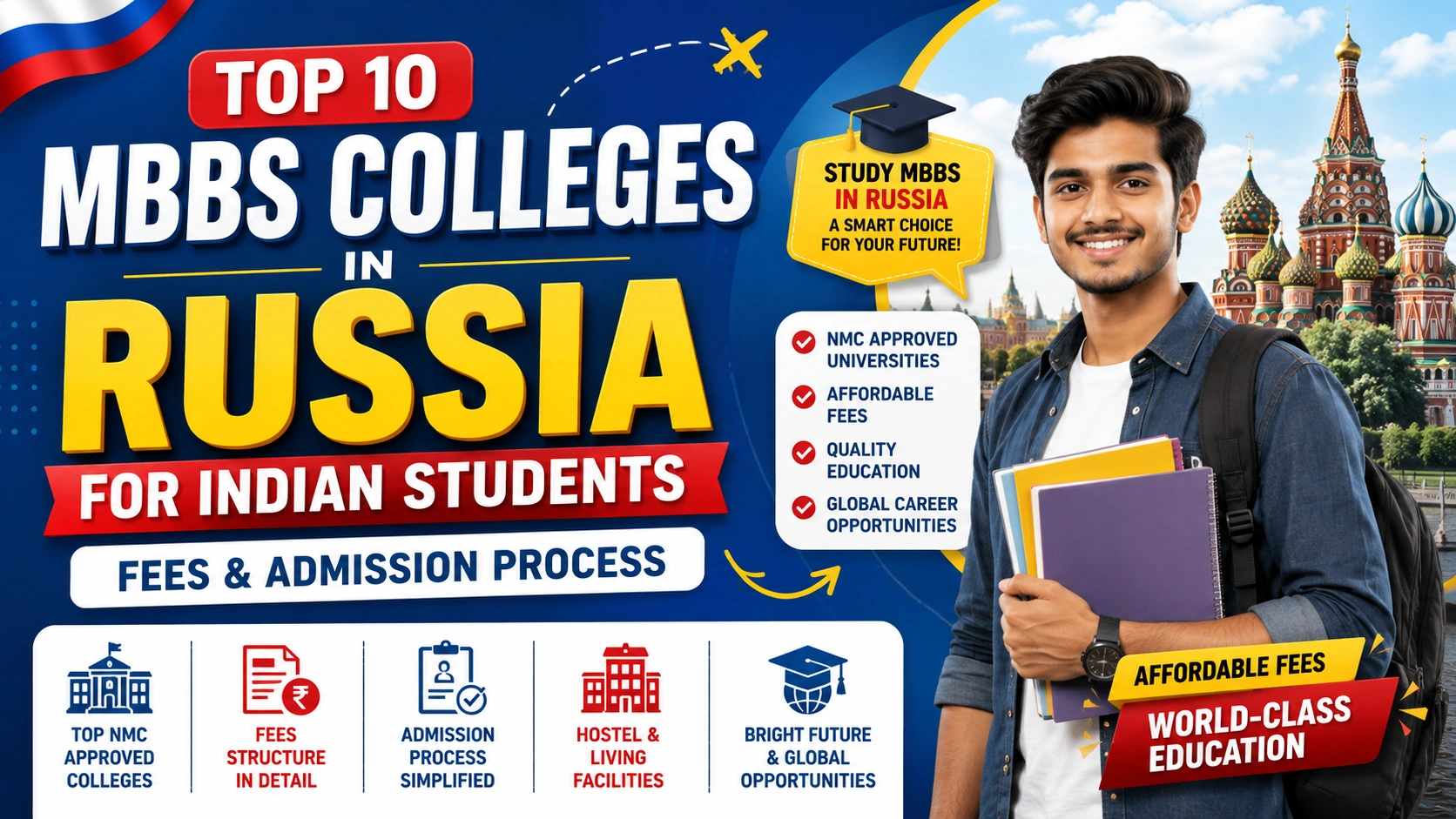
I remember standing next to a father at an education fair in Lucknow, his son's NEET scorecard folded in his shirt pocket like a bad report card he didn't want anyone to see. "Beta ka score 340 hai," he said, almost apologizing to me, a stranger. Three hundred and forty. Not enough for a government seat in UP, barely enough to negotiate a management quota seat back home for a number that would make most families flinch. He'd heard Russia was "cheap and easy." That word — easy — is doing a lot of heavy lifting in Indian MBBS conversations right now, and it's not entirely honest.
I've spoken to maybe two hundred students and parents over the years who've gone this route, some through phone calls at midnight when a hostel in Volgograd loses power, some in person after they've returned as licensed doctors clearing their FMGE. The Russia route works. But it works for specific reasons, not because it's some magic shortcut, and anyone selling it that way is skipping the fine print.
Why Russia Even Entered the Indian MBBS Conversation
Cost, mostly. A private medical seat in India can run ₹60 lakh to over a crore for the full course. In Russia, most universities complete the six-year MBBS program for somewhere between ₹18 lakh and ₹35 lakh, tuition included, hostel extra. That gap is why agents in Lucknow, Patna, and Hyderabad started pushing Russia hard around 2015 onward, and why the numbers of Indian students there have stayed high despite the geopolitical noise since 2022.
The degrees are recognized — when the university is listed with WHO and appears on the WDOMS global directory, and when the student eventually clears the FMGE/NExT exam that the NMC mandates for practicing in India. That last part gets glossed over constantly. A Russian MBBS degree doesn't hand you a license to practice in Meerut. It hands you eligibility to sit an exam you still have to pass.
The Ten Institutions That Actually Matter
Kazan Federal University in Tatarstan is probably the most recognized name among Indian applicants, largely because its Institute of Fundamental Medicine and Biology has a genuine research reputation, not just a marketing brochure. Fees there run close to $4,500-$5,000 a year.
Then there's Bashkir State Medical University in Ufa — older, more traditional in teaching style, popular with students from Kerala and Punjab specifically, I've noticed, for reasons nobody has fully explained to me. Crimean Federal University in Simferopol comes up often too, though its political status keeps some cautious families away, and I don't blame them for asking twice.
Volgograd State Medical University has one of the largest Indian student populations in the country — walk through its hostel corridors in October and you'll smell rajma-chawal from three different kitchens simultaneously. Orenburg State Medical University, closer to the Kazakhstan border, draws students partly because of lower living costs; a decent hostel room there might cost $60-70 a month compared to nearly double that in Moscow-adjacent cities.
I'd also put Ryazan State Medical University, Tver State Medical University, and Altai State Medical University on this list — solid mid-tier institutions, WHO-listed, with fee structures between $4,000 and $5,500 annually. Rostov State Medical University in southern Russia gets attention for its clinical exposure, since it sits in a genuinely large city with real patient volume, not a sleepy college town. And Northern State Medical University in Arkhangelsk rounds it out — brutal winters, honestly, temperatures dropping to minus 30, and every single student I've talked to from there mentions buying a proper thermal jacket in their first month because whatever they packed from Kanpur simply wasn't enough.
What the Fees Actually Cover, and What They Don't
Here's where I get slightly annoyed at how agents pitch this. The quoted tuition — usually $4,000 to $6,000 a year — rarely includes hostel fees, food, winter clothing, or the flight home. Round-trip tickets from most Russian cities to Delhi or Mumbai during winter break can cost anywhere from ₹35,000 to ₹55,000 depending on the season and how far in advance you book, and I've watched students skip a trip home entirely in their second year just to save that money for books and exam prep.
Add mess or self-cooking expenses — most Indian students cook, because eating out three times a day isn't financially realistic on a student budget — and you're looking at another $100-150 monthly. Insurance, visa renewal, and local transport add smaller but real amounts. A family budgeting only the tuition figure they saw on a WhatsApp forward is going to be short by lakhs over six years. Not because the university lied. But because nobody read past the headline number.
The Admission Process, Stripped of the Sales Pitch
You need a NEET qualifying score — not a specific cutoff for most Russian universities, just qualification, which is exactly why families with modest scores gravitate here. After that it's a fairly mechanical process: application form, academic transcripts, passport, a medical fitness certificate, and an invitation letter from the university before you apply for a student visa at the Russian consulate.
Most universities don't conduct entrance exams for MBBS admission, which sounds convenient until you realize it also means the university isn't filtering for academic readiness the way an entrance test would. I've met a few students who struggled badly in first-year physiology and biochemistry simply because their foundational biology wasn't strong enough, NEET qualification or not. Language is another quiet hurdle — the first year typically includes Russian language classes, and while clinical years often shift to English-medium instruction, hospital rotations in later years sometimes require basic Russian for patient interaction, something orientation sessions don't always emphasize enough.
A Quick Word on Choosing Wisely
If you're researching MBBS in Russia seriously, don't let city glamour decide the choice — Moscow and St. Petersburg universities cost noticeably more, and a smaller city like Orenburg or Ryazan can deliver the same NMC-recognized outcome for less money and, arguably, fewer distractions. For a family evaluating MBBS in Russia for Indian Student options specifically, checking a university's current WHO and NMC listing status directly — not through an agent's claim — should be step one, not step five. Anyone genuinely committed to figuring out how to study MBBS in Russia the right way needs to treat this as a six-year financial and emotional commitment, not a one-time admission event.
Before You Sign Anything
I've seen enthusiasm curdle into regret when the reality of a Siberian winter or a lonely hostel room in month four sets in, and no agent brochure prepares a nineteen-year-old for that. Russia can be a genuinely good option. It has produced thousands of working doctors from India already. But it demands homework — on fees, on university recognition status, on your own tolerance for distance from home — that most families skip in the rush to just get an admission letter in hand. Do that homework first. The seat will still be there next month.