
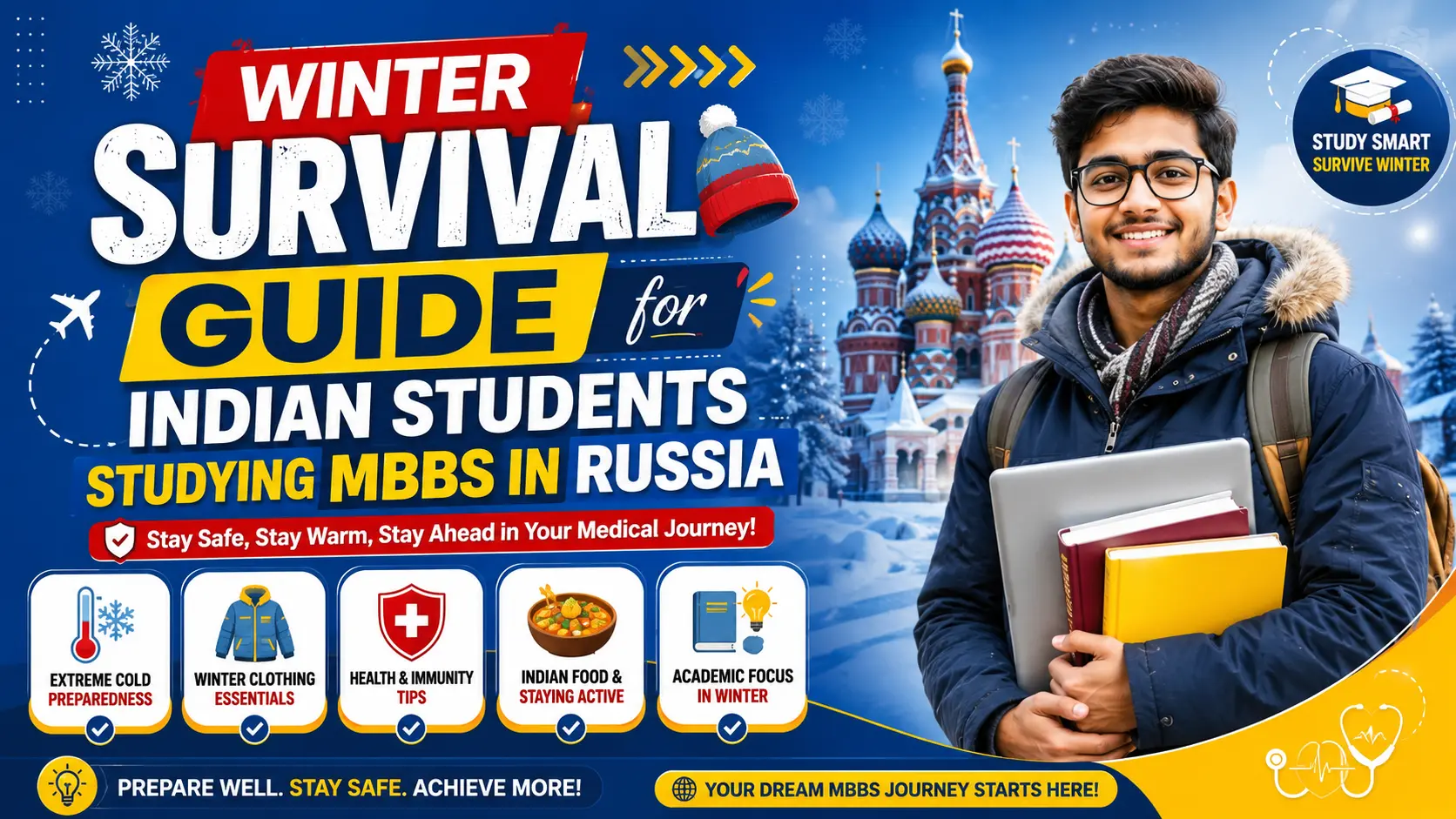
Studying MBBS in Russia is a golden opportunity for Indian students to obtain a medical degree and an exciting chance for Indian students to become internationally qualified doctors. Russia has many features and benefits such as budget-friendly tuition costs, medical universities that are recognized worldwide, increased clinical exposure, and offered courses in English. The one major challenge that many students experience is the unforgiving Russian winter.
Some Russian cities experience temperatures that can be 20 degrees Celsius below zero, have snow-covered and icy roads, and have limited hours of daylight. Though this can definitely be intimidating for many, thousands of Indian students manage to adapt with thoughtful planning.
In this winter survival guide, we have included a plethora of information about clothing, housing, health, food, transportation, and budgeting and school life. We have also included information on eligibility, admissions, fees, career prospects, top universities, and have included an FAQ about MBBS in Russia.
Featured Snippet
How do Indian students survive winter while studying MBBS In Russia?
By planning ahead, Indian students studying MBBS in Russia are able to enjoy a safe winter while wearing layered thermal clothes, investing in waterproof boots, eating healthy, being active, and following the forecast, as well as using heated public transport and choosing a university hostel that has a central heating system.
Why Winter Should Not Stop You from Choosing MBBS In Russia
One of the major concerns for a plethora of parents is the extreme cold that can be experienced in Russia. The good news is that the Russian cities are designed for the extreme cold and harsh winters.
Students will appreciate:
- University buildings with central heating
- Heated hostel rooms
- Reliable public transport
- Winter-ready infrastructure
- Well-equipped hospitals
- Affordable winter clothing available locally
If you’re planning to study MBBS in Russia, the first few weeks help students adapt to the cold winter.
Winter Clothing
It is important to layer clothing. Consider this in three different levels.
Base Layer
- Thermal innerwear
- Wool socks
- Thermal leggings
Middle Layer
- Sweaters
- Hoodies
- Fleece jackets
Outer Layer
- Heavy winter jacket
- Waterproof coat
- Windproof gloves
- Wool cap
- Neck warmer
Footwear
Russian snow can be heavy, consider the following for proper snow footwear:
- Waterproof boots
- Anti-slip soles
- Thick wool socks
It is cheaper to buy winter clothing in Russia.
SEO Table: Winter Packing Checklist
|
Item |
Recommended |
Importance |
|
Thermal Wear |
2–3 Sets |
Very High |
|
Winter Jacket |
1 Heavy Jacket |
Essential |
|
Wool Socks |
8–10 Pairs |
Essential |
|
Waterproof Boots |
1 Pair |
Essential |
|
Gloves |
2 Pairs |
High |
|
Wool Cap |
2 |
High |
|
Neck Warmer |
2 |
High |
|
Moisturizer |
Yes |
Important |
|
Lip Balm |
Yes |
Important |
|
Vitamin Supplements |
Optional |
Helpful |
Health Tips During Russian Winter
Keep in mind that cold weather may have different effects on different people.
To stay healthy, you should:
- Drink plenty of water
- Eat protein-rich food
- Get 7-8 hours of sleep
- Avoid long outdoor exposure in storms
- Wash hands regularly
Students pursuing MBBS in Russia for Indian students should also register with the university medical center upon arrival.
Winter Food Tips
Keep in mind that your body needs extra energy in cold weather.
Best Foods List:
- Hot soups
- Rice
- Lentils
- Eggs
- Chicken
- Dry fruits
- Fresh fruits
- Herbal tea
Most universities also have Indian mess, making Medical education in Russia much more comfortable for Indian students.
How to Travel Safely During Snowfall
Russian cities have good winter roads. Remember:
- Wear anti slip shoes
- Check weather forecasts
- Use metro as much as possible
- Avoid frozen lakes
- Walk safely on icy foot paths
Students who choose Medical study in Russia easily adapt to winter travel.
Hostel Life During Winter
Almost every university hostel has:
- Central Heating
- Hot water
- Shared kitchens
- Laundry rooms
- Wi-Fi
- Security
Hostels keep warm through winter making study medicine in Russia easy even with low temperatures outside.
Managing Mental Health During Long Winters
Days become shorter in winter. Keep positive by:
- Exercising regularly
- Socializing with classmates
- Joining university clubs
- Celebrating Indian festivals
- Keeping in touch with family
- Exploring Russian culture
These habits improve student life during Medical education in Russia.
Eligibility For MBBS In Russia
Indian students generally require:
- Min 50% in PCB (40% for reserved categories as per applicable regulations)
- Qualified NEET
- Age min 17 years
- Passport
- Medical fitness certificate
Always check the latest updates at National Medical Commission (NMC).
MBBS Admission Process
Students who apply for mbbs in Russia generally do the following:
- Select university which is NMC recognized
- Present Study Documents
- Get admission letter
- Apply for invitation letter
- Get student visa
- Buy flight tickets
- Enroll in university.
For students eager to pursue an MBBS in Russia, beginning preparation several months before the school year begins is best. For MBBS in Russia, costs vary based on the school and the city.
For students comparing MBBS costs in Russia for Indian students, the price range to complete the program is between ₹18–35 lakhs (this includes the cost of living and tuition). Scholarships and financing programs are available to students who would like to know more about the MBBS costs in Russia for Indian students. Students may also apply for educational loans to study MBBS in Russia through eligible banks located in India.
SEO Table: Quick Facts About Studying MBBS in Russia
|
Particular |
Details |
|
Course Duration |
6 Years |
|
Medium |
English |
|
NEET Required |
Yes |
|
Annual Tuition Fee |
₹3–7 Lakhs |
|
Living Cost |
₹15,000–30,000/month |
|
Climate |
Cold Winters |
|
Degree Recognition |
NMC, WHO Listed Universities |
|
Internship |
Included as per university curriculum |
Some Top Choices for Studying MBBS in Russia
|
University |
Approx. Annual Tuition (₹) |
Hostel Fees (₹/year) |
Medium |
Passing rate |
|---|---|---|---|---|
|
₹3.4–4.2 lakh |
₹40,000 |
English |
20% - 25% |
|
|
₹3.8–4.8 lakh |
₹45,000 |
English |
25% - 30% |
|
|
₹3.0–4.0 lakh |
₹35,000 |
English |
30% - 35% |
|
|
₹2.8–3.8 lakh |
₹40,000 |
English |
25% - 30% |
|
|
₹4.0–5.0 lakh |
₹50,000 |
English |
25% - 30% |
|
|
₹5.0–6.0 lakh |
₹55,000 |
English |
20% - 25% |
|
|
₹4.2–5.3 lakh |
₹45,000 |
English |
10% - 15% |
Students comparing options for MBBS in Russia should also verify program listings through the World Directory of Medical Schools (WDOMS).
Benefits of MBBS in Russia
- Low tuition
- Education and teaching modern and up to date
- English is the medium of instruction on campus
- Safe environment
- Education is recognized by the WHO
- Excellent employment opportunities around the world
These benefits show why many Indian students are looking to Russia to study MBBS. Studying MBBS from Russia also provides students with international exposure.
Disadvantages of MBBS In Russia
Some of the disadvantages include:
- Long and freezing winters
- Language barrier after campus
- Cultural barrier
- Homesickness
- Less daylight in winters
After proper planning and preparation, students are able to manage these disadvantages while pursuing MBBS in Russia.
MBBS Duration in Russia
Duration is one of the most frequently asked questions when it comes to MBBS in Russia.
The duration of MBBS in Russia is generally 6 years which also includes the clinical training.
So, how many years is MBBS in Russia? The answer is 6 years in most of the universities.
Career Scope After MBBS In Russia
Once graduated, one has various career options like:
- Practice in India after qualifying the prescribed licensing exam as mandated.
- Pursue PG in another country.
- Practice in medicine in various other countries.
- Medical research.
- Administration of hospitals.
- Public health issues.
- Medical teaching.
One can enjoy a career in any of the fields after completion of medical studies from Russia.
Recognition and Accreditation
Before selecting a university, students are advised to verify the recognition from:
Through these official links, students can check the eligibility, recognition, and current admission requirements.
FAQs
Is winter in Russia too difficult for Indian students?
No. If students have proper clothing and with hostels being heated, most of the students adapt in a few weeks.
Can I buy winter clothes in Russia?
Yes, winter clothes are readily available and are usually better suited for the weather.
Is MBBS In Russia safe during winter?
Yes, Russian universities and cities are fully prepared to handle heavy snow falls and freezing temperatures.
Are hostels heated?
Yes, most university hostels have central heating during the winter.
Can vegetarians survive in Russia?
Yes, there is a lot of vegetarian food available. Vegetarian food is available at Indian restaurants, grocery stores, and hostel kitchens.
Is NEET compulsory?
Yes, Indian students must qualify NEET as per the current regulations to pursue an MBBS abroad.
Conclusion
Studying MBBS In Russia offers more than just a medical degree. It offers students the chance to get a quality education, have a new cultural experience and work on personal development. Although the Russian winter can seem daunting, with proper planning, a good winter wardrobe, healthy habits and support from the university, the Russian winter won't be too hard to adapt to.
A large number of Indian students go to Russia to get their medical education and then have successful medical careers all over the world. If you understand the weather, and plan your finances correctly and choose an approved university you can be confident you are making the right decision to study medicine. The winter will ensure you have a memorable experience that helps you grow personally and gain the quality of being both resilient and independent to make the most of your MBBS experience.